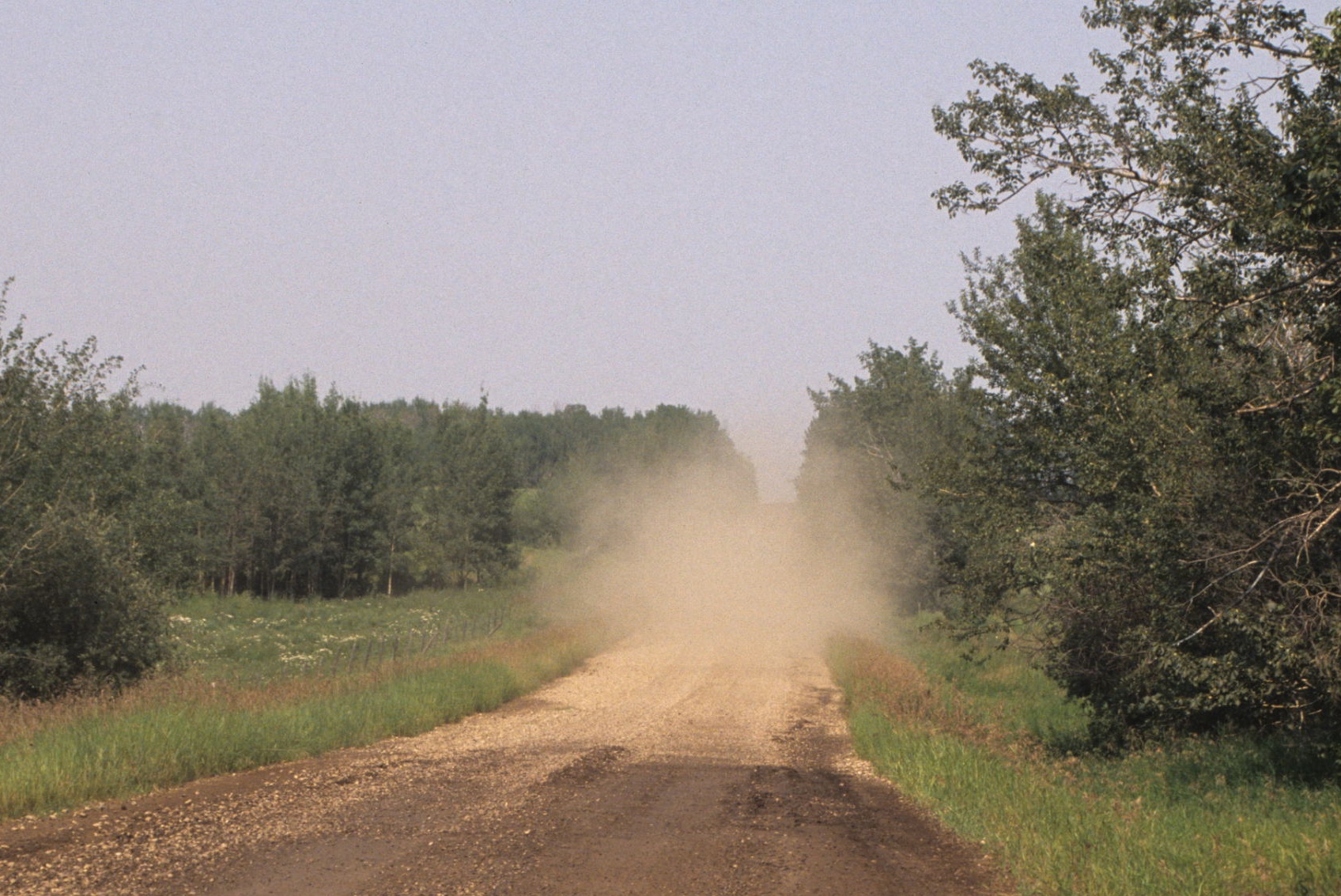
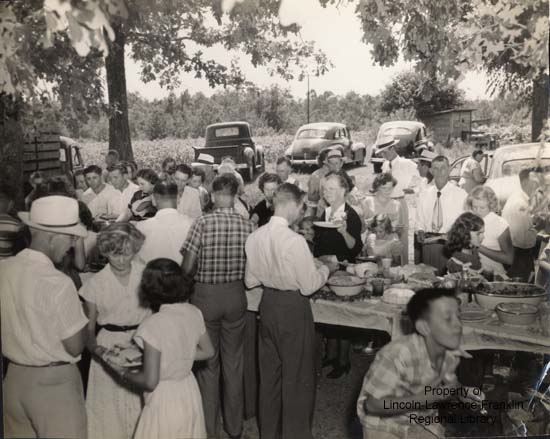
All photos by the incomparable Marty Kittrell, who has explored Mississippi for years, camera in hand.
Any
drive through the Delta will yield quite a number of small scenes away-off in
the fields---the brave shapes of compact churches which seem to populate these
rolling acres more freely than tractors sometimes.
They’re mostly deserted, these last small gathering-houses of the
locals, as the ebb and flow of population mimed the changes in the
state---prosperity or poverty, as they carried the denizens to greener fields,
so to speak, or as the young’uns moved swiftly away in search of jobs and a
better life, the members remaining slowly took their places in the small plots
of the surrounding cemetery.

This one reminds me of a dissatisfied baby with a Kewpie curl , standing on his little concrete feet.
The
last time I was down there, in 2004, you could still see the withering husks of
old country churches across the fields---their white paint dimmed to gray by time
and heat and field-dust. So many of
them seem to be put down like little chalk Monopoly pieces, with no rhyme or reason in the middle of a REAL Nowhere,
with the narrow gravel of their ingress hidden by rolling rows of cotton and
beans. And many of them are deserted
now---stripped to the echoes, as the exodus of the farm-folk and
country-dwellers emptied those timeworn pews.
Even when I still lived there, countless empty edifices raised their bowing
heads above that rich black gumbo, still humbly waiting for the faithful to
return.

And many a beautiful topiary of the encroaching kudzu has, at its center, a small chapel, still with altar, pews, and choir-loft nestled within.
And many a beautiful topiary of the encroaching kudzu has, at its center, a small chapel, still with altar, pews, and choir-loft nestled within.

One
of the great mysteries to me was always the leaving of things---it was as if
one night after services, there was a mysterious mass departure from the Chapel of St. Mary
Celeste. Many a small building still
holds hymnbooks, offering plates, the necessaries for Lord’s Supper, even
notices on the wall and the flyaway dimness of printed programs blown down beneath
the pews like the dried leaves on the porch.

These
wonderful old-to-me plates which held wine/grape juice for The Lord’s Supper
are a neat successor to the Chalice, the Cup of the really olden years. I love the idea of them, and I love the
inset glisten of the tee-ninecy cups, but the whole affair, from felty bottom
to small Cross-shaped finial on the lid, always strikes me as a charming meld of
carousel and centrifuge. I wonder why
someone didn’t rescue this tray, and take the cups away in it. I wonder more how they got all those wee
jiggling cups home without breakage.
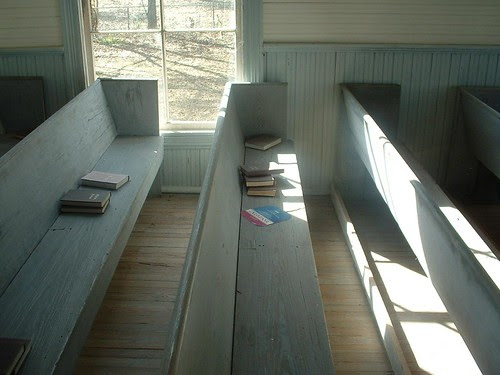
Some
of the structures have lost walls, roofs, steeples, and weather has savaged the
contents, with all the paper and wood frayed by the elements The pews still stand, sagging with the
years; old number boards and banners hang their messages from decades past, and
the floors creak their remembrance of footsteps long stilled.
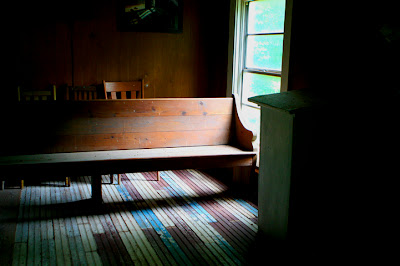
A few of the places seem still bright and the congregation just dismissed---you can practically hear the notes of "What a friend . . ." ringing across the pews as the Sunday suits and the bright hats nod their way out.

Except for the
languishing pianos. They seem to take the abandonment hardest, with the
yellowing keys and the dust sifting in. I think they are the saddest relics, with their
once-bright varnish bubbled and chipped, and the yellowed keys swelled above the
key bed like protruding teeth.

They're used to the
human touch and that symbiotic pairing which makes the music; without the hands
to play them, they die---they faint---they fail.

There should be a State Commission for the gentle removal and preservation of all the frangible religious artifacts left to the wind. I'd write my Representative for that.